Female Hair Loss: Why Women Are Underdiagnosed, Undertreated, and What the Evidence Actually Supports
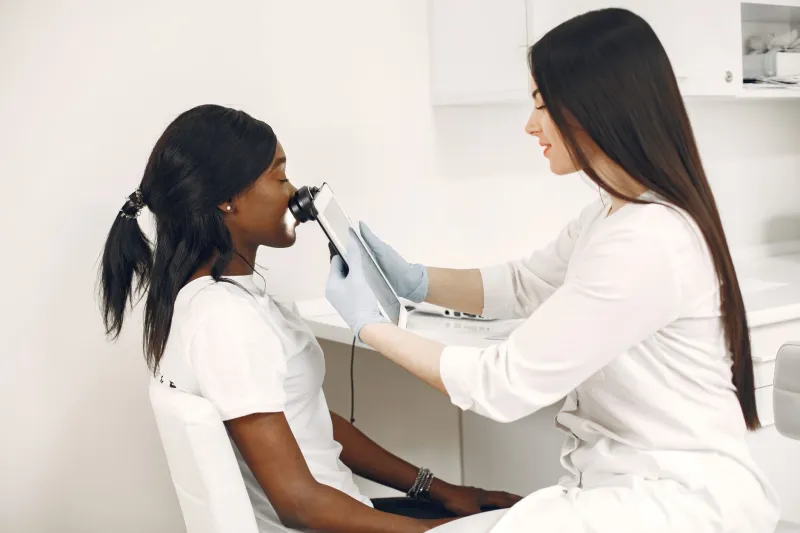
Approximately 40 percent of American women will experience noticeable hair loss by age 50, according to data from the American Academy of Dermatology. Despite this prevalence, the conversation surrounding hair restoration has historically been dominated by male-centric research, male-centric marketing, and clinical frameworks developed almost exclusively around androgenetic alopecia in men. The result is a significant care gap — one that leaves many women without an accurate diagnosis, let alone an appropriate treatment plan.
Understanding why female hair loss is categorically different from male pattern baldness, and why that difference has profound implications for treatment, is the starting point for any woman seeking effective intervention.
The Physiology Is Not the Same
Male pattern baldness, or androgenetic alopecia in men, follows a well-defined recession pattern along the hairline and crown, driven primarily by the androgen dihydrotestosterone (DHT) acting on genetically susceptible follicles. The pathway is relatively linear, which has made it tractable for pharmaceutical development.
Female pattern hair loss (FPHL) presents differently in almost every respect. Rather than a receding hairline, women typically experience diffuse thinning across the crown and top of the scalp, with the frontal hairline often preserved — a pattern captured by the Ludwig classification scale. The underlying hormonal drivers are more heterogeneous. While androgens play a role in some women with FPHL, a substantial proportion of affected women have androgen levels within normal laboratory ranges, suggesting that follicular sensitivity, estrogen decline, and other systemic factors contribute independently.
This complexity means that the diagnostic and therapeutic approach appropriate for a 52-year-old postmenopausal woman experiencing diffuse thinning is fundamentally different from that used for a 35-year-old man with a receding hairline — yet clinical practice does not always reflect this reality.
Why Women Are Frequently Misdiagnosed
Several structural and cultural factors contribute to the diagnostic gap in female hair loss.
First, many primary care physicians are not trained to conduct a thorough trichological assessment. A woman presenting with hair shedding may receive a basic thyroid panel and a referral for stress management without any evaluation of scalp morphology, hair pull test results, or hormonal contributors beyond TSH.
Second, the conditions that mimic or overlap with FPHL are more numerous in women. Telogen effluvium — diffuse shedding triggered by physical or emotional stressors, pregnancy, rapid weight loss, or illness — can be mistaken for FPHL and vice versa. Conditions including polycystic ovary syndrome (PCOS), iron deficiency anemia, and autoimmune thyroid disease are more prevalent in women and can each independently drive hair loss. Without a systematic workup, these contributing factors are easily overlooked.
Third, there is a documented tendency in clinical settings to attribute hair loss in women to anxiety or stress without objective investigation. A 2020 survey published in the International Journal of Women's Dermatology found that women with hair loss reported significantly longer diagnostic delays than men and were more likely to have been told their condition was stress-related before receiving a confirmed diagnosis.
FDA-Approved Options for Women: What Is Actually Validated
The landscape of FDA-approved treatments specifically indicated for women is narrower than many patients realize, though emerging therapies are expanding the options available.
Minoxidil remains the only FDA-approved topical treatment indicated for female pattern hair loss in the United States. The 2% concentration formulation carries the official indication for women, though many dermatologists now prescribe the 5% foam off-label based on clinical evidence supporting its superior efficacy. Studies have demonstrated that 5% minoxidil foam applied once daily in women produces outcomes comparable to twice-daily application of the 2% solution, with a favorable tolerability profile.
Low-dose oral minoxidil (typically 0.25 mg to 1.25 mg daily in women) has generated considerable interest based on a growing body of evidence, including a 2020 retrospective study in the Journal of the American Academy of Dermatology that demonstrated significant hair density improvements in female patients. While not yet carrying an FDA indication for hair loss, it is increasingly prescribed off-label by dermatologists experienced in hair restoration.
Finasteride and dutasteride present a more complicated picture for women. Both medications are contraindicated in women of childbearing potential due to the risk of fetal harm. However, postmenopausal women may be candidates, and some clinicians prescribe these agents in this population with appropriate counseling. Evidence in women is less robust than in men, and the decision requires individualized risk-benefit assessment.
Spironolactone, an aldosterone antagonist with anti-androgenic properties, is widely used off-label for women with FPHL, particularly those with evidence of hormonal contribution such as elevated androgen levels or concurrent PCOS. While randomized controlled trial data in women with FPHL specifically are limited, clinical experience and observational studies support its use in appropriately selected patients.
Hormonal Transitions and Their Specific Impact on Women
The hormonal architecture of a woman's life creates distinct windows of vulnerability for hair loss that have no male equivalent. Postpartum telogen effluvium — the dramatic shedding that commonly occurs two to four months after delivery — affects a substantial proportion of new mothers. Though typically self-resolving within six to twelve months, it can be deeply distressing and may overlap with the onset of FPHL in women with a genetic predisposition.
The perimenopause and postmenopause transitions represent another critical period. Declining estrogen levels are associated with reduced follicular support, and the relative increase in androgenic activity that accompanies estrogen withdrawal can accelerate FPHL progression. Women in this demographic often experience the most rapid phase of hair thinning and may benefit most from early intervention.
Hormone therapy, where medically appropriate, may have a protective effect on hair retention during menopause, though it is not indicated solely for hair loss and carries its own risk profile that must be evaluated with a physician.
Barriers to Care and How to Navigate Them
Beyond the clinical complexity, women with hair loss face practical barriers that can delay access to appropriate care. Dermatology appointment wait times in the United States can extend to several months in many metropolitan areas, and hair loss may not be triaged as urgently as other dermatological concerns. Telehealth platforms that specialize in hair restoration have expanded access for some patients, though they vary considerably in the depth of evaluation they can provide.
Insurance coverage for hair loss treatments remains inconsistent. Minoxidil is available over the counter, making it accessible without a prescription, but laboratory workups, specialist consultations, and procedural treatments such as PRP are frequently not covered or subject to high cost-sharing requirements.
For women navigating this landscape, advocacy within the clinical encounter is essential. Requesting a comprehensive hormonal panel, a scalp biopsy when the diagnosis is uncertain, and a referral to a board-certified dermatologist with specific expertise in hair disorders are all reasonable and evidence-supported steps.
A Different Framework for Female Hair Restoration
Effective hair restoration for women requires abandoning the male-centric default and building an individualized treatment plan that accounts for hormonal status, life stage, underlying medical conditions, and treatment tolerance. The evidence base, while still growing, supports meaningful intervention for the majority of women with FPHL — provided they receive an accurate diagnosis and access to a clinician who understands the full scope of available options.
The most important action any woman experiencing hair thinning can take is to seek evaluation promptly. Earlier intervention, before significant follicular miniaturization has occurred, consistently produces better outcomes across all treatment modalities.