At-Home Hair Loss Tests: What the Kits Won't Tell You—and What Dermatologists Actually Order
The Promise vs. the Reality of At-Home Hair Loss Testing
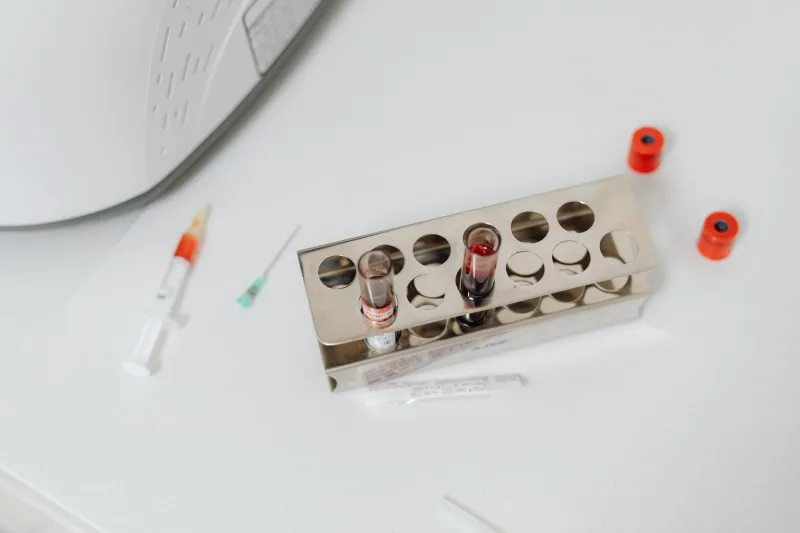
Walk through any pharmacy aisle or scroll through social media long enough, and you will eventually encounter an advertisement for an at-home hair loss test. The pitch is compelling: a simple cheek swab or finger-prick blood draw, mailed to a lab, yields a personalized report explaining exactly why your hair is thinning. For the roughly 80 million Americans affected by androgenetic alopecia alone, that kind of clarity sounds invaluable.
But clinical dermatologists tell a more complicated story. While some consumer-facing diagnostics provide genuinely useful data, many others measure biomarkers that are either poorly correlated with hair loss outcomes or already presumed by the time a clinician evaluates you. Understanding the difference can save you hundreds of dollars—and, more importantly, help you arrive at a specialist's office with information that actually moves your care forward.
What These Kits Are Actually Measuring
Most direct-to-consumer hair loss panels fall into one of three categories: DHT and hormone-level assessments, genetic predisposition screenings, and nutritional deficiency panels. Each category carries its own set of clinical limitations.
DHT Level Tests
Dihydrotestosterone (DHT) is the androgen most strongly linked to androgenetic hair loss in both men and women. It seems logical, therefore, that measuring your serum DHT would clarify whether this hormone is driving your thinning. In practice, however, circulating DHT levels in the bloodstream correlate poorly with follicular sensitivity—the actual mechanism behind pattern baldness.
Androgenetic alopecia is driven not by abnormally elevated DHT in most patients, but by the genetic sensitivity of hair follicles to normal DHT concentrations. A person with textbook-range serum DHT can still experience significant hair loss if their follicles are highly reactive. Conversely, someone with elevated DHT may retain a full head of hair. Dermatologists evaluating androgenetic alopecia rarely order a standalone DHT panel for this reason; the result seldom changes the treatment recommendation.
Genetic Predisposition Panels
Several companies now offer panels that analyze variants in genes associated with hair loss risk—most notably the androgen receptor gene (AR) on the X chromosome, as well as variants near the 20p11 locus identified in genome-wide association studies. These tests can identify elevated statistical risk for androgenetic alopecia with reasonable accuracy.
The clinical limitation here is one of actionability. If you are already observing active shedding or a receding hairline, a genetic risk score confirms what is visibly apparent. It does not reveal which treatment will work best for you, how aggressive your progression will be, or whether another diagnosis—such as telogen effluvium, alopecia areata, or a thyroid disorder—is contributing to your hair loss alongside genetic factors. Genetic panels are most useful as early predictive tools for individuals with no current symptoms who want to begin preventive strategies before loss becomes visible.
Nutritional Deficiency Screenings
Of the three categories, nutritional panels offer the most consistently actionable data—with important caveats. Iron deficiency (measured via serum ferritin), vitamin D insufficiency, and zinc depletion are all legitimately associated with diffuse hair shedding in clinical literature. If an at-home panel identifies a significant deficiency that prompts supplementation or dietary adjustment, that represents a genuine clinical benefit.
The concern is one of completeness. Consumer kits typically screen a narrow subset of nutrients and rarely measure the full panel a dermatologist would request. Standard clinical workups for hair loss often include serum ferritin, complete blood count, thyroid-stimulating hormone (TSH), free T3 and T4, vitamin D (25-OH), zinc, and sometimes B12 and folate depending on the patient's history. An at-home kit that returns a clean result across four biomarkers may leave critical deficiencies undetected.
What Dermatologists Actually Order
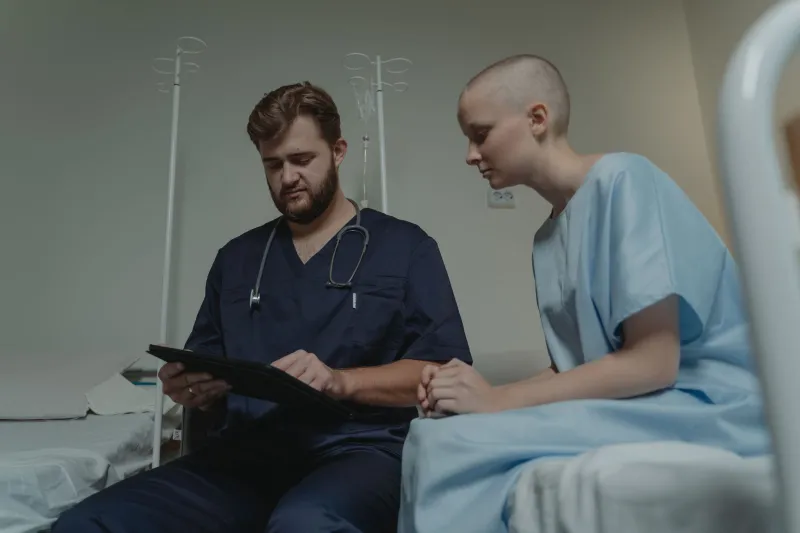
To understand how consumer diagnostics compare to clinical practice, it helps to see what a board-certified dermatologist or trichologist typically evaluates during an initial hair loss consultation.
Beyond blood panels, the clinical evaluation includes a detailed patient history covering onset, shedding patterns, recent stressors, medication changes, and family history. A dermatoscopic examination—using a handheld device that magnifies the scalp surface—allows the clinician to assess miniaturization patterns, follicular density, and scalp inflammation in ways no blood test can replicate. A pull test may be performed to assess active shedding. In some cases, a scalp biopsy provides definitive histological data.
This multimodal approach reflects a fundamental truth about hair loss: it is rarely a single-variable problem. Androgenetic alopecia frequently coexists with nutritional deficiencies, stress-induced telogen effluvium, or subclinical thyroid dysfunction. An at-home test measuring one or two isolated biomarkers cannot capture that complexity.
Where At-Home Testing Does Add Value
This is not an argument against all consumer diagnostics. Used thoughtfully, certain tests serve a legitimate purpose in a patient's pre-consultation preparation.
Nutritional panels, even incomplete ones, can surface deficiencies worth discussing with a physician—particularly ferritin levels, which are frequently suboptimal in women with diffuse shedding. Genetic screenings may motivate younger individuals with a strong family history to seek earlier medical consultation, before significant loss has occurred. And for patients in rural areas with limited access to dermatology specialists, having any objective data point in hand before a telehealth appointment adds context.
The key is treating these results as preliminary conversation-starters rather than definitive diagnoses. Bring your at-home test results to your dermatologist; do not use them to self-prescribe or delay a proper evaluation.
A Practical Framework Before You Buy
Before investing in an at-home hair loss kit, ask the following questions:
- Does this test measure something a dermatologist would actually order? If the biomarker isn't part of standard clinical workup protocols, its relevance is questionable.
- Will the result change my next step? If you plan to see a dermatologist regardless, a $150 kit that duplicates what they will order anyway provides minimal added value.
- Is the lab CLIA-certified? Consumer blood tests should be processed by Clinical Laboratory Improvement Amendments (CLIA)-certified facilities to ensure analytical accuracy.
- Does the company provide clinical interpretation support? A report without guidance from a licensed healthcare professional is data without context.
The Bottom Line
At-home hair loss diagnostics occupy a narrow but legitimate space in the broader landscape of hair restoration. Nutritional screenings from reputable, CLIA-certified labs can yield actionable data, particularly for women with diffuse shedding. Genetic panels offer predictive value for asymptomatic individuals with strong family histories. DHT-only panels, however, provide limited clinical utility and are frequently marketed beyond what the science supports.
No consumer kit replaces a comprehensive clinical evaluation. Dermatoscopy, patient history, and the clinical judgment of a specialist trained in hair and scalp disorders remain the gold standard for accurate diagnosis. If you are experiencing noticeable hair loss, the most evidence-based first step is not a mail-in kit—it is scheduling an appointment with a board-certified dermatologist or trichologist who can assess the full picture. Use at-home testing to prepare for that conversation, not to avoid it.